Free Fringe Shows In Edinburgh: How To See The Festival Without Buying A Ticket
The Edinburgh Fringe sold almost three million tickets in 2026, but hundreds of shows asked for nothing up front. Here is how the free Fringe works, who runs it, and how to plan a day around it.
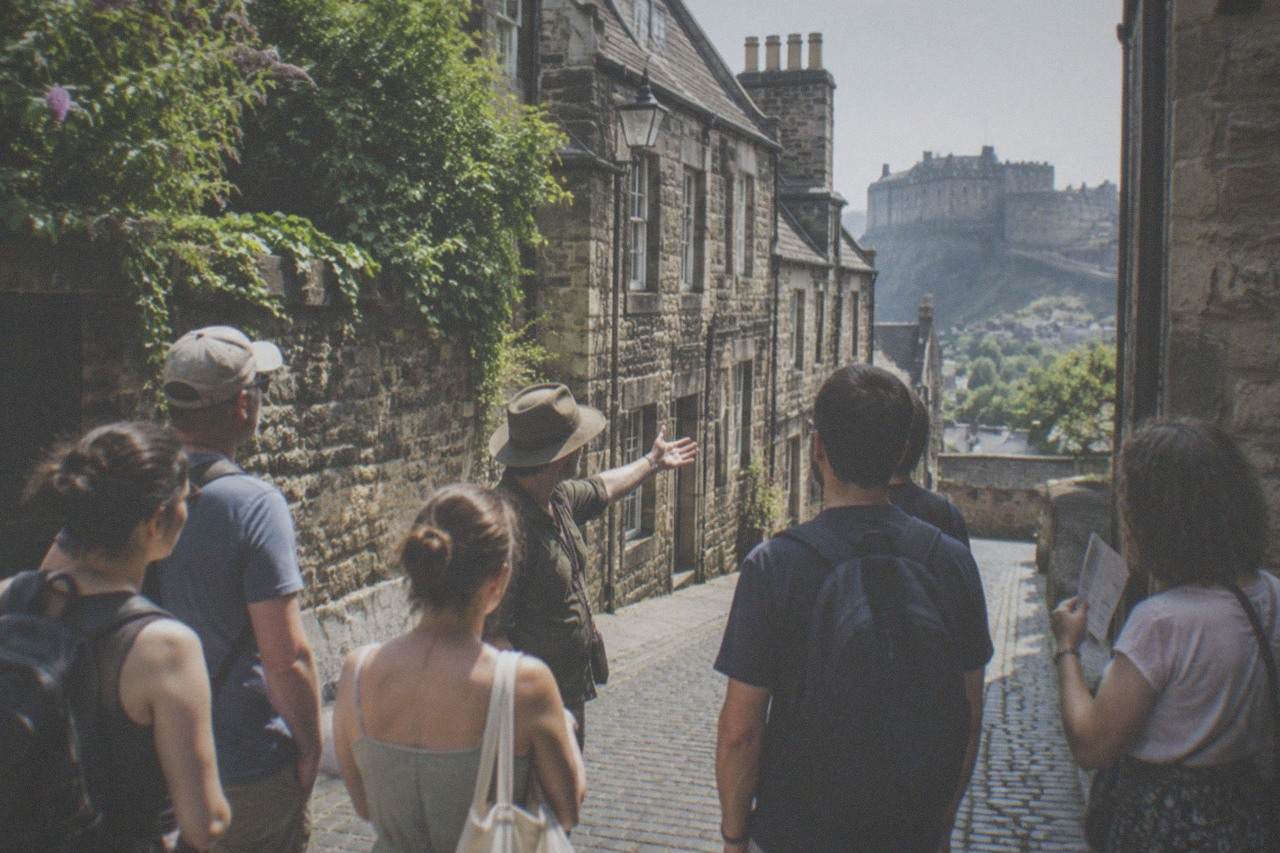
Short answer
Edinburgh's free Fringe runs on two organisations, PBH's Free Fringe and the Laughing Horse Free Festival, plus 691 Pay What You Want shows listed in the main programme in 2026. Entry costs nothing, performers pass a bucket at the end, and seats are first-come, first-served. The Fringe ran 7 to 31 August in 2026 and returns 6 to 30 August 2027.
The Edinburgh Festival Fringe issued 2,805,395 tickets in 2026, and that figure excludes the free and non-ticketed shows entirely. The free side of the festival is not a fringe of the Fringe, it is a parallel machine with its own venues, its own rulebook and its own economics, run largely by two organisations that have been doing this for years. Understanding how it works is the difference between a festival fortnight that costs a fortune and one that costs almost nothing beyond food and a bed.
I have spent enough Augusts in Scottish festival cities to know the drill: the bucket at the end of a free show is not an awkward afterthought, it is the entire business model. This guide sets out who runs the free Fringe, how entry actually works, how to get a seat, and what the rest of a festival day in Edinburgh offers for nothing.
What Does "Free" Actually Mean At The Edinburgh Fringe?
Free at the Fringe means free entry with a requested donation at the end. Shows listed as free and unticketed are first-come, first-served with no booking, while Pay What You Can shows let you book a ticket and choose your price. Performers keep the donations, and nobody is turned away for paying nothing. The 2026 programme listed 691 Pay What You Want or Pay What You Can shows alongside the free festival venues.
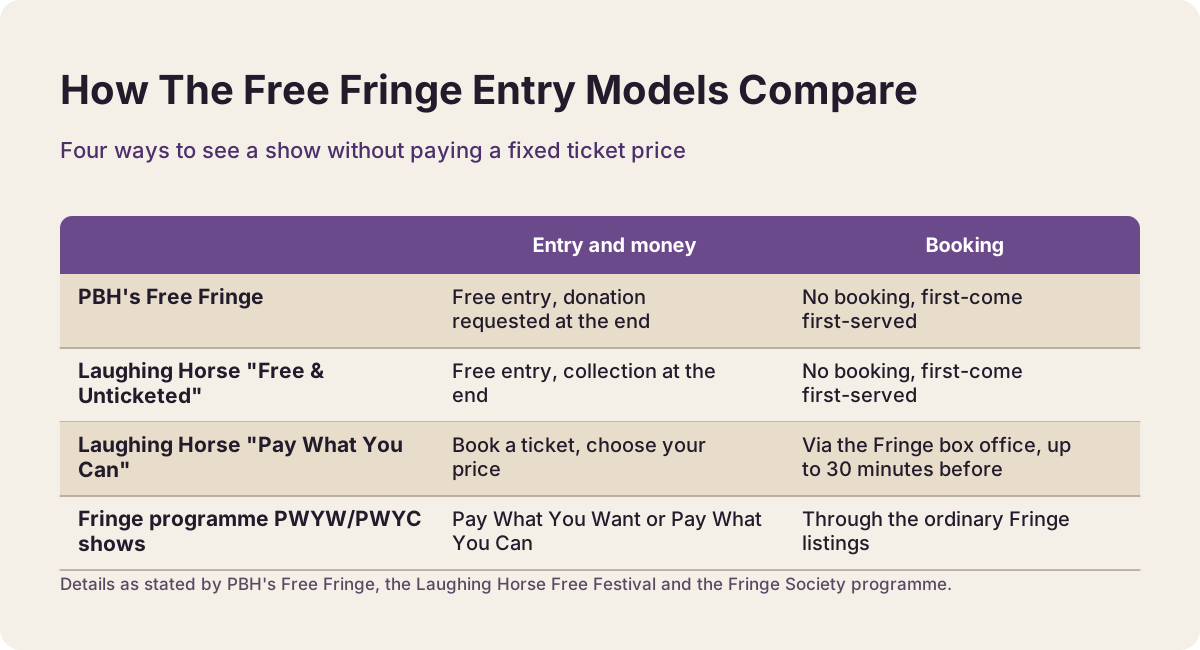
That is the honest version, and it matters. Writing "free shows at the Fringe" without mentioning the bucket is the single most common way guides get this wrong. PBH's Free Fringe states its model plainly on its own site: free entry, but the artist may ask for a donation at the end. The Laughing Horse Free Festival runs two formats, "Free & Unticketed" and "Pay What You Can", and says that 100 percent of the ticket price or donations for each show goes directly to the performer.
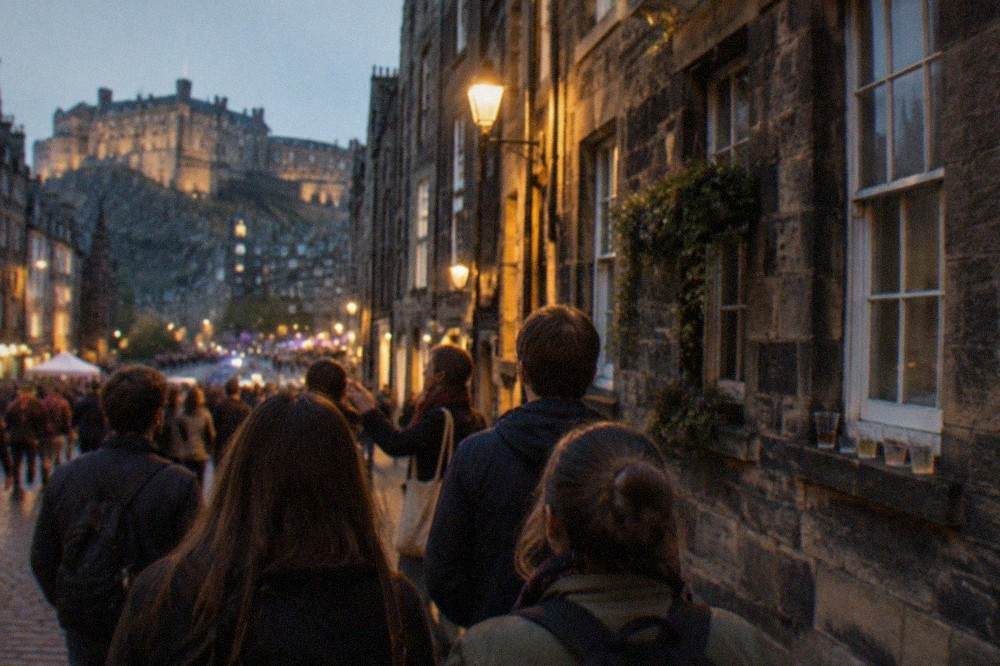
There is a third category that sits inside the main Fringe programme itself. The Fringe Society's 2026 programme featured 691 Pay What You Want or Pay What You Can shows, spread across the ordinary ticketed listings rather than concentrated in the free venues. Those you can book through the Fringe box office like any other show, choosing your own price up to thirty minutes before start time in some cases.
The practical consequence is that "free" is a spectrum, not a switch. At one end, a walk-in venue where you drop coins in a bucket on the way out. At the other, a booked ticket with a price you set yourself. Both cost nothing if you want them to, and both rely on enough people paying something to keep the performers fed. If you cannot pay, you are still welcome: that is the deal these venues operate on, and they say so themselves.
Who Runs The Free Fringe, And How Do The Two Free Festivals Work?
Two organisations run Edinburgh's dedicated free Fringe: PBH's Free Fringe, a Scottish charity that staged more than 360 shows and over 6,700 performances in 2026, and the Laughing Horse Free Festival, which runs free and unticketed shows alongside Pay What You Can shows. Both give 100 percent of donations to the performers, and neither charges for entry.
PBH's Free Fringe is the older of the two operations and is registered as an OSCR-regulated Scottish charity. Its own summary of 2026 gives the scale: over 6,700 performances of more than 360 shows across its venues, running 6 to 30 August. Its entry rule is one sentence long: free entry, but the artist may ask for a donation at the end. There is no ticket, no booking fee and no minimum spend.
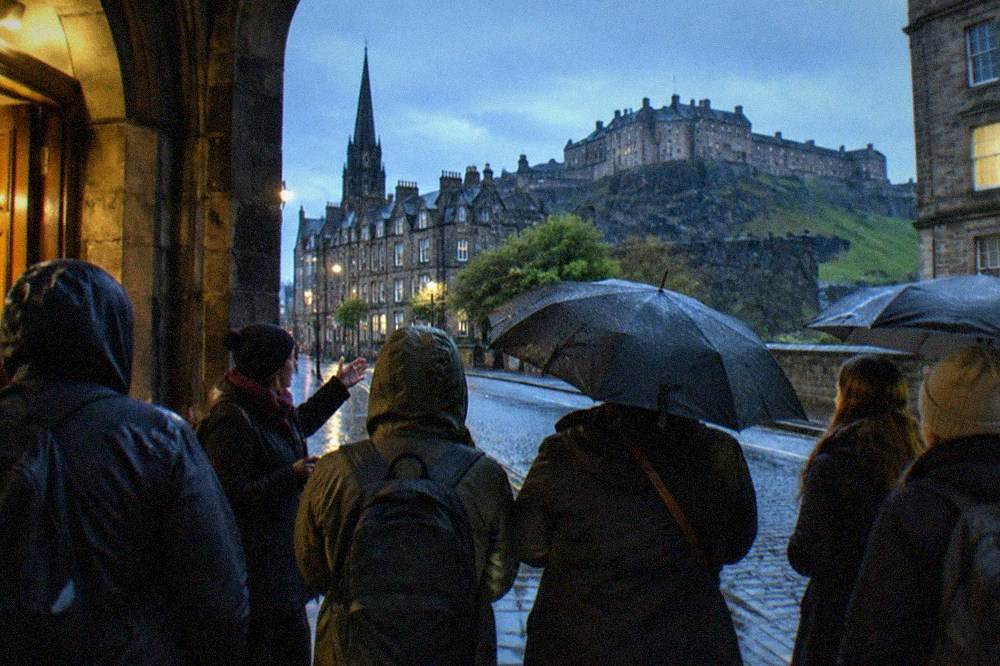
The Laughing Horse Free Festival explains its two formats in detail on its own site. Free and unticketed shows work on a first-come, first-served basis: you turn up, you get a seat if there is one, and you donate to the collection at the end. Pay What You Can shows let you book a ticket to guarantee entry and choose your price from the Fringe box office, up to thirty minutes before the show starts, after which remaining space is free at the venue on a first-come, first-served basis. Donations for walk-ins are collected at the end.
Neither organisation promises you a seat. That is not a caveat buried in the small print, it is the core of the model: free and unticketed means exactly that, and a popular show fills its room. The full picture is on PBH's own site and the Laughing Horse Free Festival pages, and the Fringe Society's own wrap-up of the 2026 festival is on the official Fringe news pages.
| Free Fringe operator | Entry model | Booking | Where the money goes |
|---|---|---|---|
| PBH's Free Fringe | Free entry, donation requested at the end | No booking, first-come first-served | The performer |
| Laughing Horse "Free & Unticketed" | Free entry, collection at the end | No booking, first-come first-served | 100% to the performer |
| Laughing Horse "Pay What You Can" | Book a ticket, choose your price | Via the Fringe box office, up to 30 minutes before | 100% to the performer |
| Fringe programme PWYW/PWYC shows | Pay What You Want or Pay What You Can | Through the ordinary Fringe listings | Set by each show |
How Do You Get A Seat, And What Fills The Gaps Between Shows?
Arrive early, queue, and plan a route: free and unticketed shows fill their rooms, and a popular free show can turn people away twenty minutes before start. Booking helps only for Pay What You Can shows. Between shows, Edinburgh's pay-what-you-wish walking tours, free museums and open hills fill the gaps at no cost, and the whole city is walkable between venues.
The seat problem is the one thing that genuinely surprises first-time free Fringe visitors. A ticketed show guarantees a chair; a free show guarantees nothing. The practical habits are simple: check the venue's room size on the Fringe listing, arrive at least fifteen to twenty minutes early for anything with a name attached, and have a second choice nearby. The free venues cluster in the Old Town, so a fallback is usually a two-minute walk away.
Between shows, the city itself is the filler. A pay-what-you-wish walking tour is the same economics as a free Fringe show: nothing to reserve, tip the guide at the end. This site lists 25 free GuruWalk walking tours in Edinburgh, in English, Spanish, Italian, French and German, with departures running from morning to evening in August, so the timetable overlaps the festival day neatly. Our guide to free walking tours in Edinburgh breaks the whole field down.
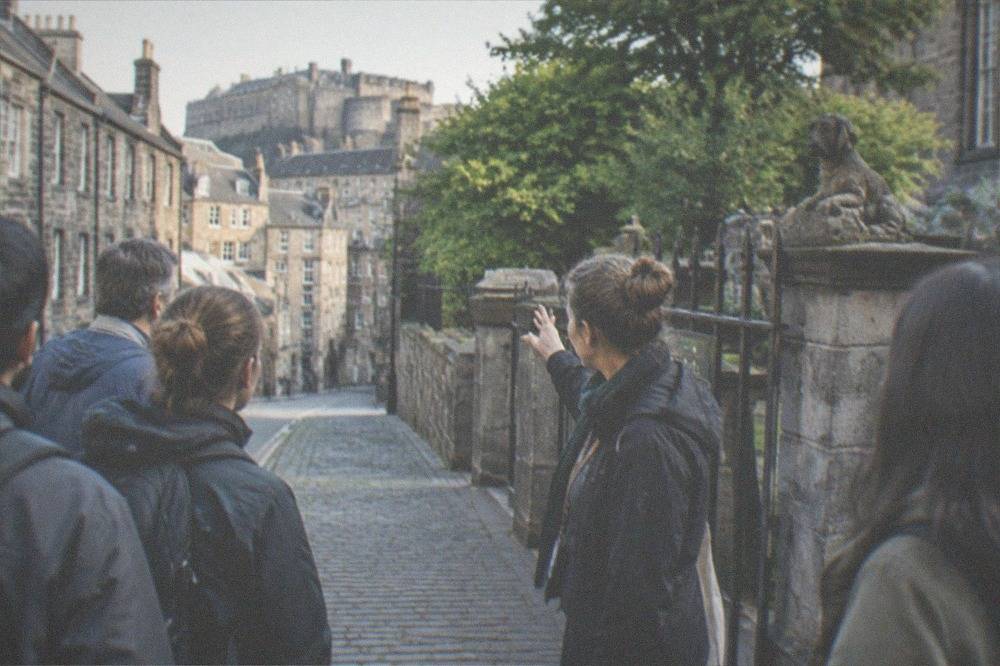
One of the most-loved English-language options meets at 33 George IV Bridge, a few minutes from the free Fringe venues around the Grassmarket and Candlemaker Row. The 2-Hour Walk With a Famous Dog is rated 4.99 out of 5 across 2,282 GuruWalk reviews, runs two hours in English, and its meeting point sits right beside Greyfriars Kirkyard, where the famous dog himself is buried. The kirkyard is open 24 hours a day, 365 days a year, so the walk and the graveyard make a natural free afternoon between a matinee and an evening show. Greyfriars Kirk itself is free to enter with donations encouraged, though it closes for general visiting on many August days because it is a Fringe venue, so check before you plan a look inside.
If a guided walk sounds like the right filler for your festival afternoon, it is worth comparing the main English-language options before you commit a morning to one. The three below cover the essential-sights ground from different angles: a famous local dog and his kirkyard, a lighter history-and-fun-facts route, and a small-group walk through the city's whole story. Each is free to reserve on GuruWalk and tipped at the end, so the only thing you are spending is time.
For Spanish speakers, the festival city is unusually well served: the largest free walk on GuruWalk is the Essential Historical Walk in Spanish, rated 4.72 out of 5 across 6,470 reviews, and there are ghost, witch-trial and Harry Potter walks in Spanish too. The language of every walk matters, and it is stated on each listing, so check before reserving. Our guide to free tours in other languages covers the full non-English field.
What Else Is Free In Edinburgh During Festival Season?
The free Fringe sits on top of a city that is already generous: the National Museum of Scotland, the Scottish National Gallery and its sister galleries, the Royal Mile museums and the Scottish Parliament all cost nothing to enter, and Arthur's Seat and Holyrood Park are free and open 24 hours a day. During August the festival itself adds free street performance on the Royal Mile to all of it. This stop sits on a free walking route, 3-Hour Old Town History, Spanish.
The permanent free attractions do not close for the festival, and they are the reliable backbone of a cheap festival day. The National Museum of Scotland offers free general entry, with charges for some special exhibitions. The National Galleries of Scotland sites, the Scottish National Gallery, the Portrait Gallery, Modern One and Modern Two, all offer free general admission with charges for some exhibitions, and they are open daily from 10am to 5pm. These are three different operators with three different rulebooks, so never assume one gallery's rule covers another: our guide to Edinburgh's free museums and guide to the free galleries keep the boundaries straight.
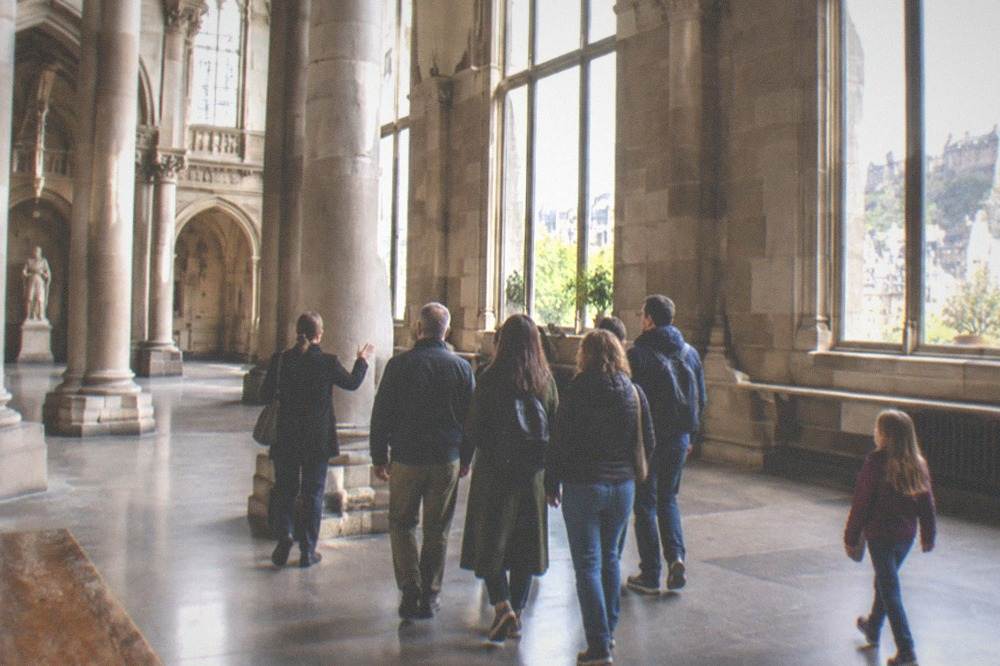
On the Royal Mile itself, the Museum of Edinburgh, The Writers' Museum and The People's Story are all free to visit and open seven days a week, 10am to 5pm. The Scottish Parliament, at the bottom of the Mile, is free to enter any time it is open with no booking needed for a self-guided visit, and free guided tours run too. Two paid attractions bookend the Mile, Edinburgh Castle and the Palace of Holyroodhouse, and neither has a free element: the castle esplanade approach and the palace's exterior are what you get for nothing, so plan around them rather than expecting a way in. The rest of the planning pages sit on Free Things to Do in Edinburgh. A free walk covers this ground: Local Lad's 2-Hour Walk.
A walk down the Mile between museum stops pairs well with a pay-what-you-wish tour. The Essential Walk With German Option meets at 361 High Street, right in the middle of the festival's busiest street, runs two hours, and is rated 4.76 out of 5 across 2,889 GuruWalk reviews. It runs in German, English, French and Italian, which makes it one of the few large free walks that suits a mixed European group.
Whichever walk you pick, the reservation itself costs nothing and you pay the guide what you think the two hours were worth. That is the same trust model the free Fringe runs on, and it is why the two pair so well in one itinerary: a morning walk, an afternoon of free shows, and an evening bucket each way.
Outdoors, Arthur's Seat and Holyrood Park are the strongest free claim in the city: the park is open 24 hours a day, year-round, and free to visit, in the operator's own words. The Radical Road path is currently closed, so climb by the main routes rather than planning the shoreline path. Calton Hill is the quick option, five minutes from Princes Street, with Collective, the free contemporary art centre on its summit, open alongside it. The Nelson Monument on the hill is paid at every tier, even the ground-floor exhibition, so enjoy the view and skip the door.
What Does A Day At The Free Fringe Actually Cost?
Entry to the free Fringe costs nothing, so a festival day's spending comes down to food, transport and what you choose to put in the bucket. A Lothian Buses adult single is £2.40 and a day ticket £6.00, and the bucket is entirely your call: the mechanism is a requested donation, not a price. Everything else on a well-planned day can cost zero.
The bucket deserves a plain explanation, because it is the economics of the whole thing. The performers pay for the venue slot and keep whatever the audience gives. There is no required amount and no published customary figure for these shows: the request is simply that you give what the show was worth to you. If a show is not for you, or money is tight that day, you are not turned away and nobody chases you. The same pay-what-you-wish logic runs through Edinburgh's free walking tours, which our guide to how free walking tours work explains end to end.
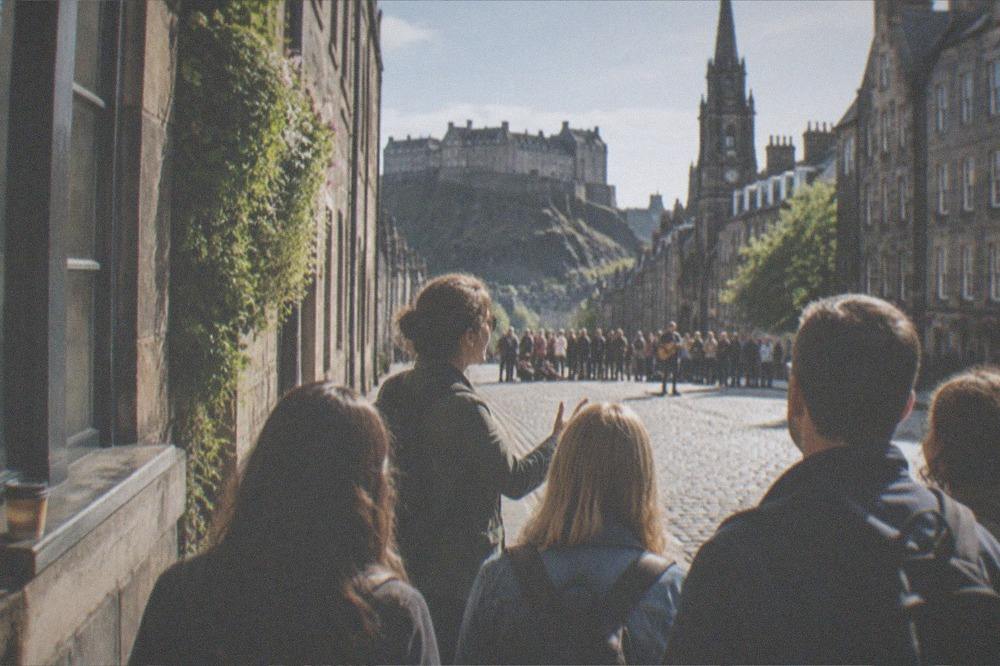
Transport is where small amounts leak. The 2026 fare change set the adult single on Lothian Buses and Edinburgh trams at £2.40 and the adult day ticket at £6.00. If you are hopping between Old Town venues all day, the day ticket pays for itself on the third ride. Better still, most free Fringe venues sit within a fifteen-minute walk of each other, and the city centre's traffic bans on Cockburn Street, Victoria Street and West Bow make the core genuinely pleasant on foot. Our guide to getting around Edinburgh on foot covers the walking-only version of a festival day. A free walk covers this ground: History And Fun Facts Walk.
A short local walk makes a good low-cost filler here too. The Local Lad's 2-Hour Walk meets at 142 High Street on the Royal Mile, runs in English, and is rated 4.96 out of 5 across 178 GuruWalk reviews. It is a smaller operation than the big essential walks, which suits anyone who has already done the headline sights and wants the festival city's back story from someone who lives in it.
| Item on a free Fringe day | Typical cost | Notes |
|---|---|---|
| Free Fringe show entry | £0 | Donation bucket at the end, your choice |
| Pay What You Can ticket | You choose | Booked via the Fringe box office |
| Lothian Buses adult single | £2.40 | 2026 fare |
| Adult bus and tram day ticket | £6.00 | Pays off on a third ride |
| National Museum of Scotland | £0 general entry | Some special exhibitions charged |
| Scottish National Gallery | £0 general admission | Some exhibitions £3.50 to £14 |
| Arthur's Seat and Holyrood Park | £0 | Open 24 hours, Radical Road closed |
When Is The Fringe, And How Should You Plan Around It?
The Fringe ran 7 to 31 August in 2026, with 4,232 shows from 77 countries and 61,277 performances across 306 venues, and the 2027 edition runs 6 to 30 August as the 80th anniversary. The free festivals overlap those dates almost exactly. Book accommodation early, because August is the one month Edinburgh never has spare beds.
The scale numbers explain why planning matters. Four thousand shows across three hundred venues means the free Fringe alone is bigger than most whole festivals, and the free venues cluster tightly in the Old Town, which concentrates the crowds. The Fringe Society's own 2026 wrap-up confirms the dates, the show count and the ticket figure, and confirms 2027 as the 80th anniversary edition running 6 to 30 August.
Accommodation is the one cost this guide cannot make free, and it is worth being blunt about it: the free Fringe removes the ticket bill, not the bed bill. Book as far ahead as you can, and expect prices to climb as August approaches. Once you are in the city, a free Fringe day can genuinely run on transport and food alone, with the bucket as a voluntary tax on the shows you enjoyed.
| Festival-season date | What runs | Free element |
|---|---|---|
| 6 to 30 August 2027 | The Fringe, 80th anniversary edition | Free Fringe venues and PWYW shows |
| Opening weekend, August | Edinburgh International Festival | Free community event in Princes Street Gardens |
| 26 and 27 September | Doors Open Days, Edinburgh and East Lothian | Over 100 buildings open free, some ask you to book |
| 29 December to 1 January | Edinburgh's Hogmanay | First Footin' free unticketed music trail on 1 January |
Beyond the Fringe itself, the wider festival season adds free one-offs worth diarising. The Edinburgh International Festival ran a free community event, Together We Rise, in Princes Street Gardens on its opening weekend in 2026, and offers thousands of free tickets through schemes including the Young Musicians Pass. At the other end of the year, Hogmanay's First Footin' on 1 January is a free unticketed live music trail across city venues, though the Street Party and the gardens concert are ticketed. And in late September, Doors Open Days opens more than 100 buildings across Edinburgh and East Lothian for free on 26 and 27 September, with some venues asking you to book ahead. Our guide to free things to do in Edinburgh at night picks up where the free Fringe day ends.
Common Questions About Free Fringe Shows In Edinburgh
Are Fringe shows really free?
Some are, genuinely. PBH's Free Fringe and the Laughing Horse Free Festival venues charge nothing for entry and pass a bucket at the end, and the main Fringe programme listed 691 Pay What You Want or Pay What You Can shows in 2026. The rest of the festival's 4,232 shows are ticketed, so check the show Fringe listing before you queue.
Do you have to donate at a free Fringe show?
No. The donation is requested, not required, and the performers keep what the audience gives. If you enjoyed the show, giving something keeps the model alive; if you cannot, you are still welcome in the room.
How do I get a seat at a free Fringe show?
Arrive early. Free and unticketed shows are first-come, first-served with no booking, and popular rooms fill twenty minutes or more before start time. Pay What You Can shows are the exception: booking a ticket guarantees entry.
When is the free Fringe in 2027?
The Fringe runs 6 to 30 August 2027 as the 80th anniversary edition, and the free festivals overlap those dates almost exactly. PBH's Free Fringe ran 6 to 30 August in 2026.
What else can I do in Edinburgh during the Fringe for free?
The National Museum of Scotland, the National Galleries of Scotland sites, the Royal Mile museums and the Scottish Parliament are all free to enter, Arthur's Seat and Holyrood Park are free and open around the clock, and pay-what-you-wish walking tours run throughout the festival month.
Can I do the Fringe on a very small budget?
Yes, if your accommodation is sorted. Show entry costs nothing, a bus day ticket is £6.00, and the free museums and parks fill every gap between performances. The bucket is the only cost you fully control.